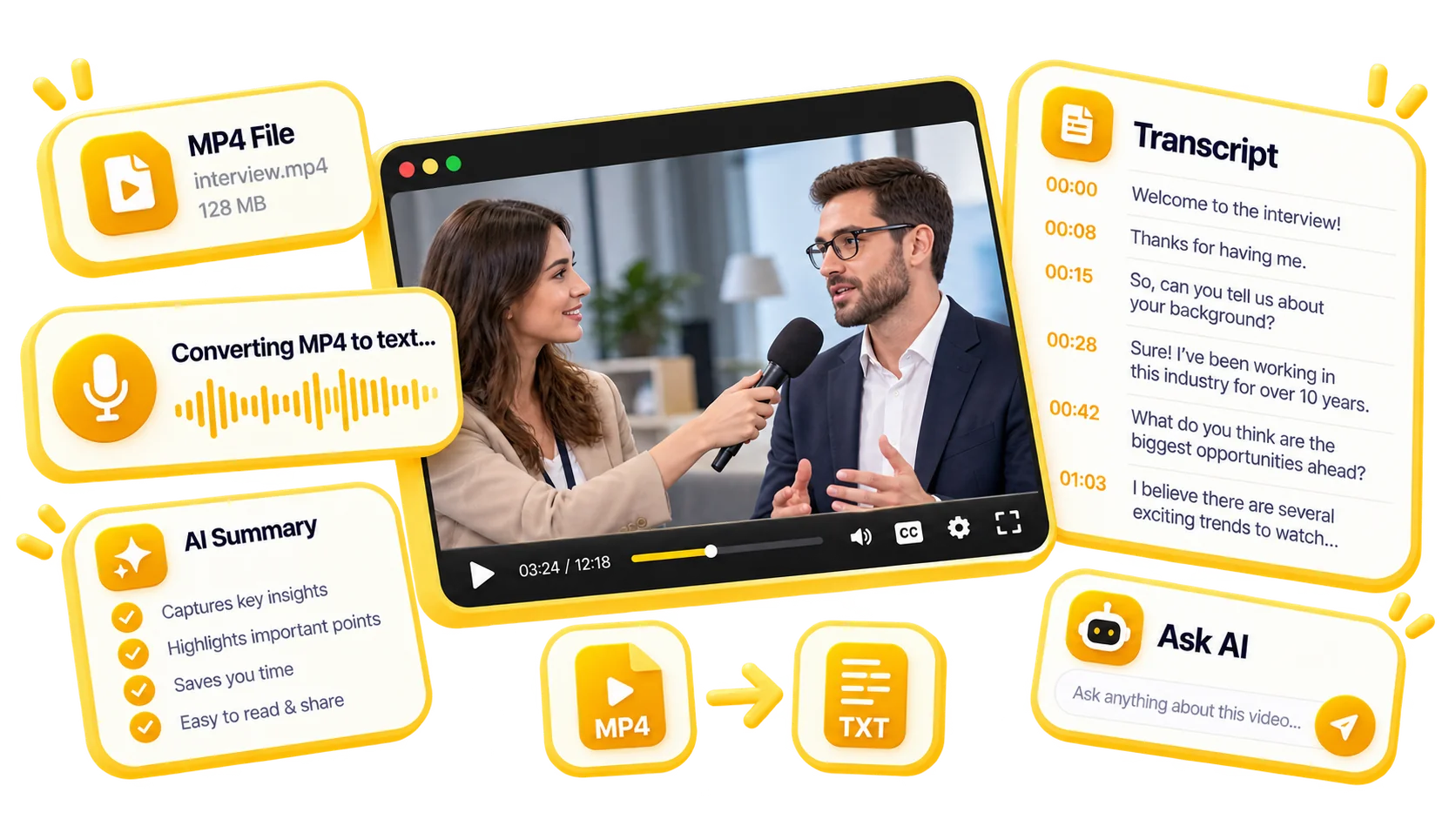
MP4 to Text in One Upload
Like an MP4 script extractor, the tool turns a file's spoken audio into text, then you read or export it.
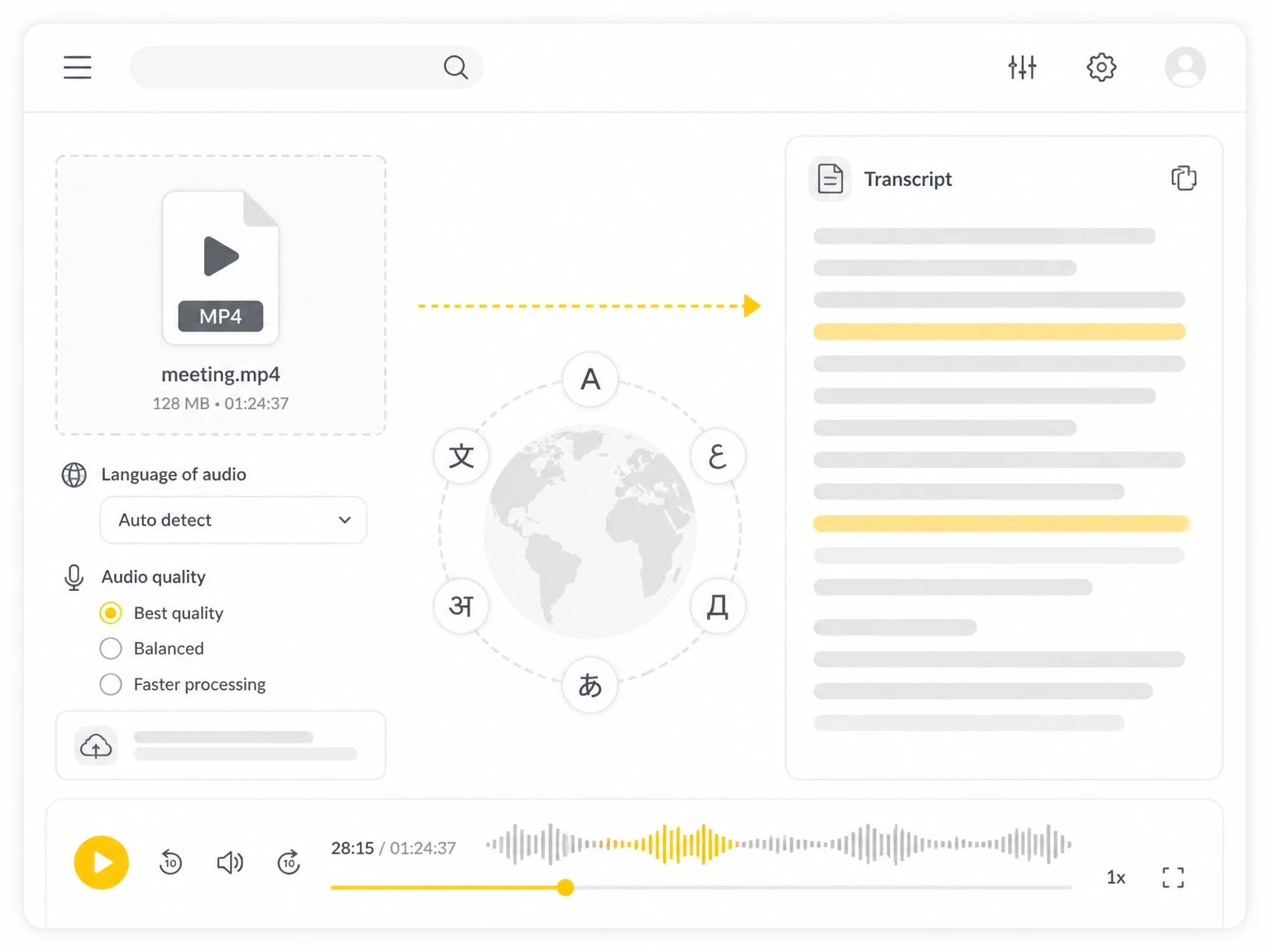

Upload popular audio or video formats — up to 5 GB per file
Distinguish speakers
Choose whether the transcript should separate different speakers in the conversation.
Subtitle enhancement
Use AI to intelligently refine transcripts for greater clarity and readability.
An MP4 file holds its meaning in the audio track — the interview, the lecture, the meeting. An MP4 to text tool turns that spoken layer into text. To convert MP4 to text, upload the file: a timestamped MP4 transcript appears for captions, notes, or search, with no extra software.
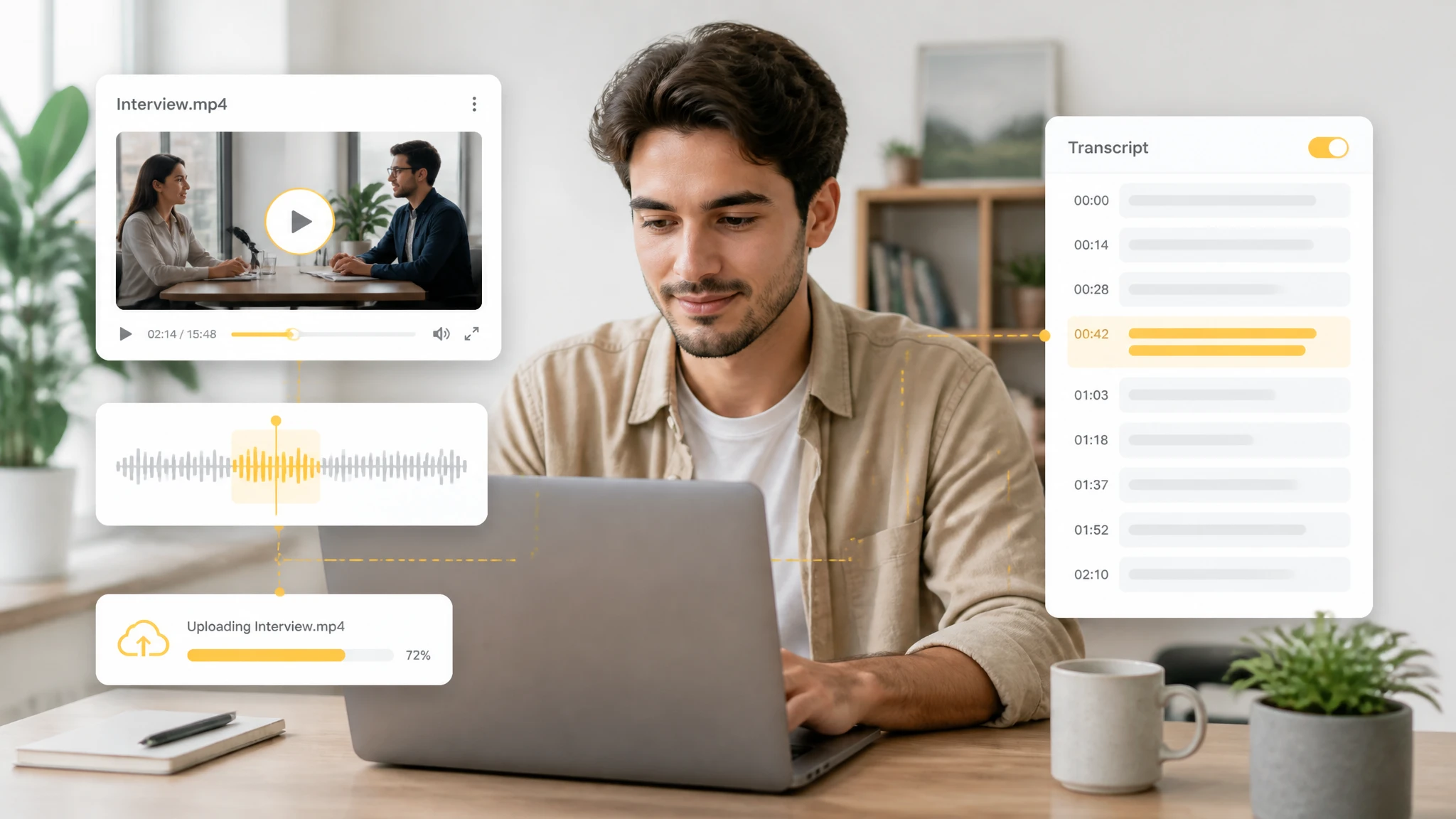
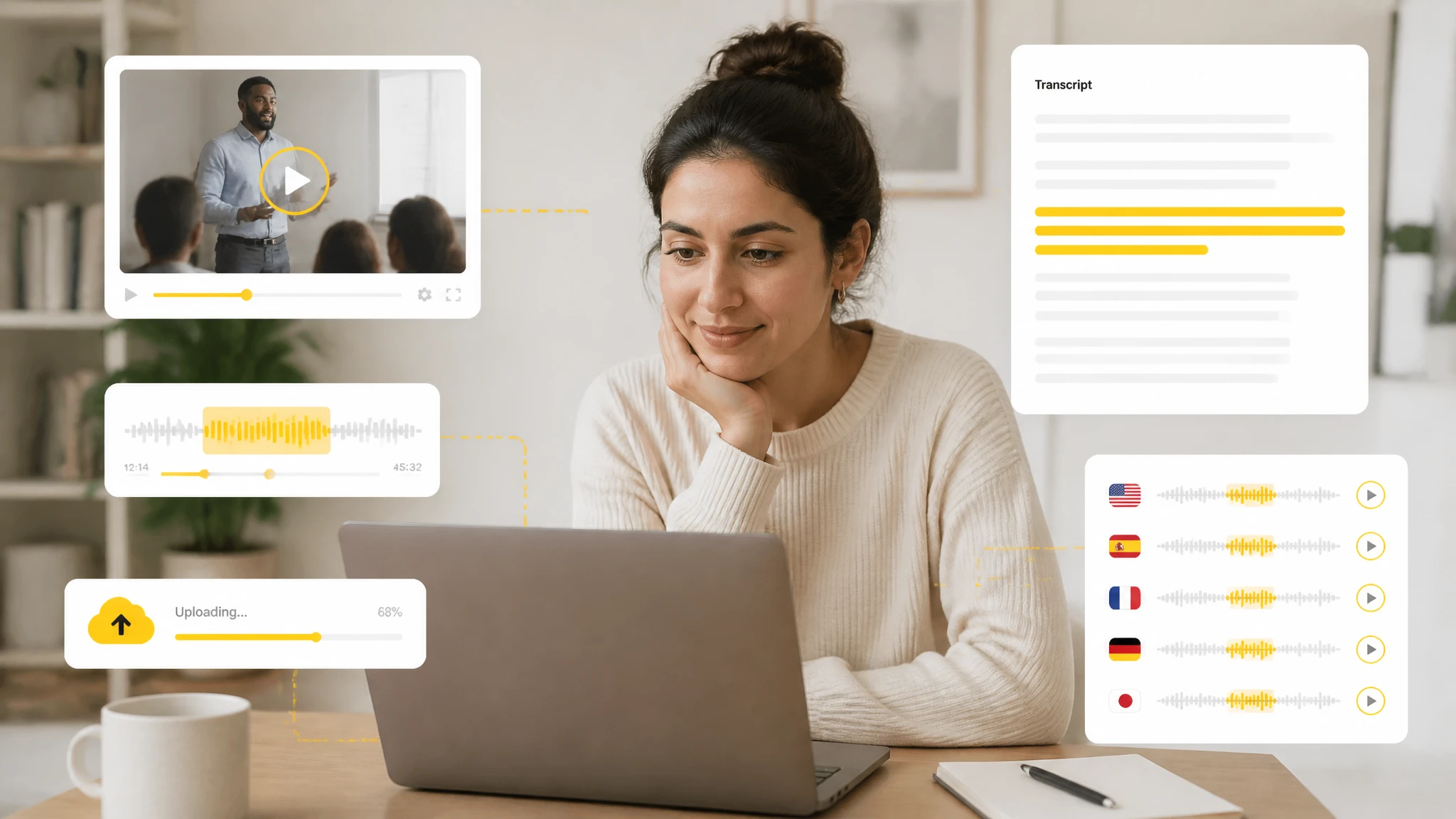
Recorded talks, webinars, and phone-captured clips are what people most often need in text. An MP4 speech to text pass handles a short clip and a long recording the same way — upload the file and get paragraph-separated, timestamped text you can skim.
Scrubbing a forty-minute recording to catch one line means replaying it again and again. Converting MP4 to text skips that: upload the file and get timestamped text you can search — no sign-up, no player plugin. Accuracy still varies with audio clarity, so key quotes deserve a quick check against the clip.
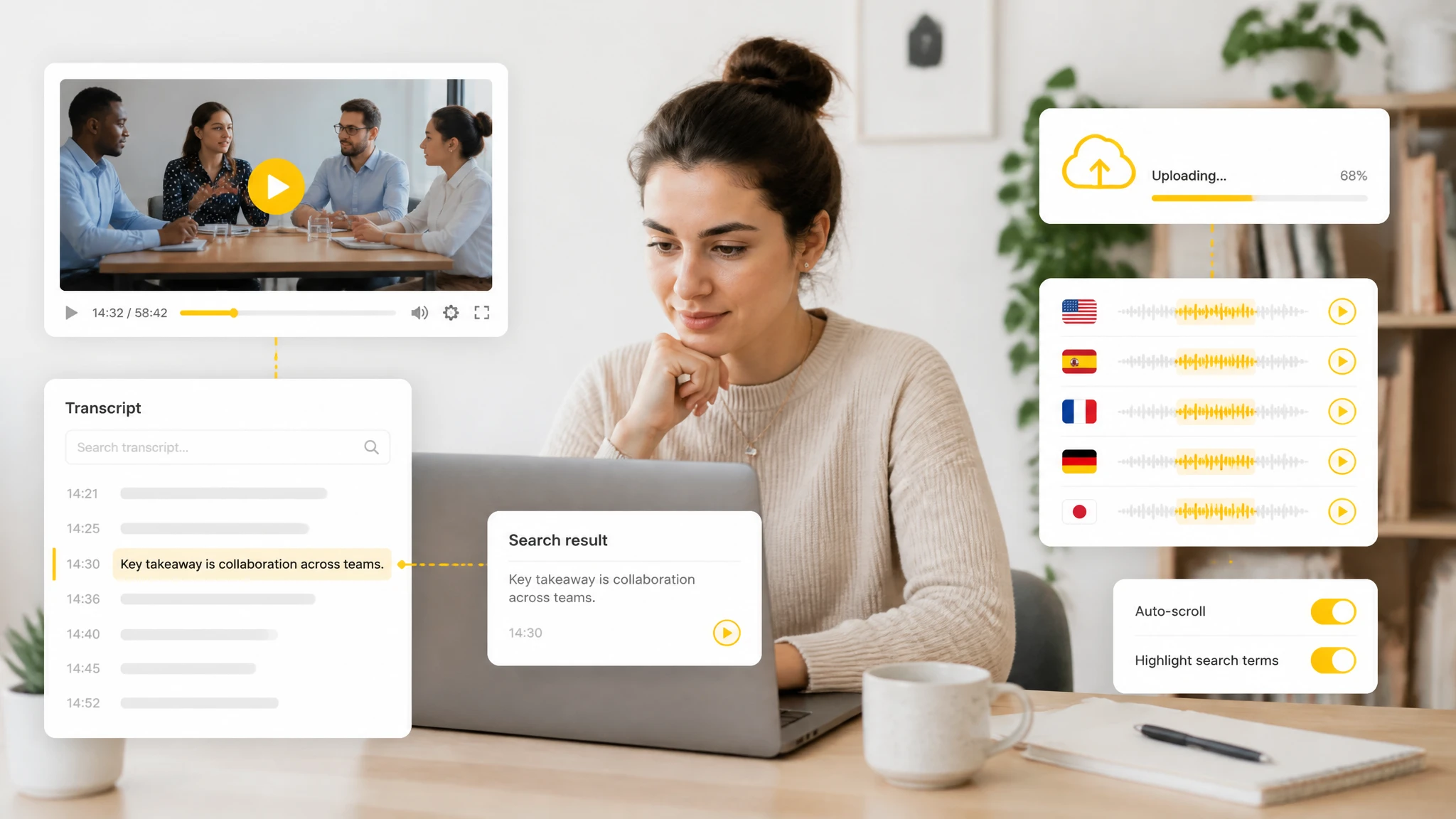
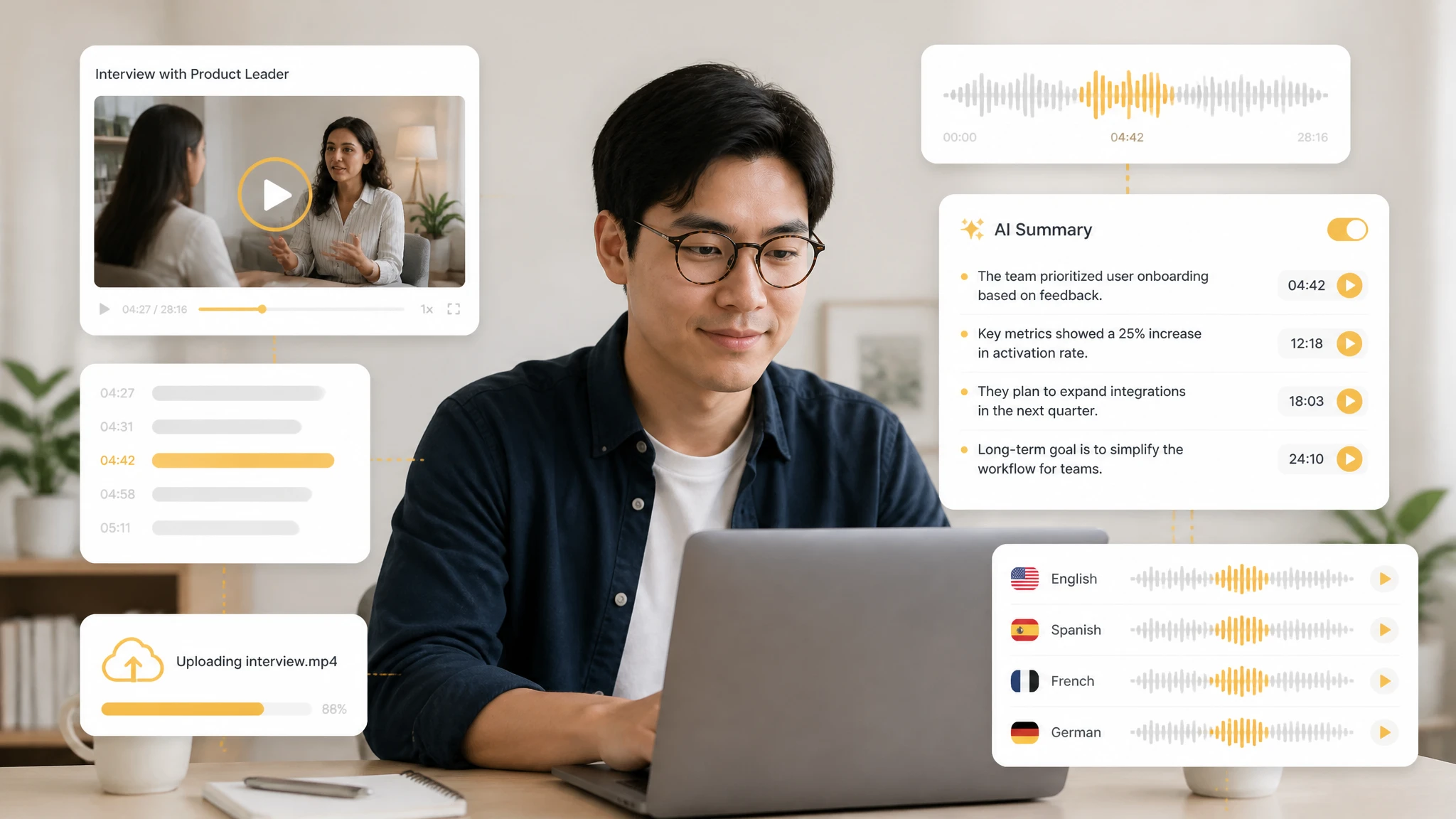
MP4 audio to text covers more than one container. The same upload workflow turns a long interview, a webinar, or a course recording into text; an AI summarizer then pulls key points per section and links them back to the source clip. Files with little spoken audio return less to summarize.
Like an MP4 script extractor, the tool turns a file's spoken audio into text, then you read or export it.
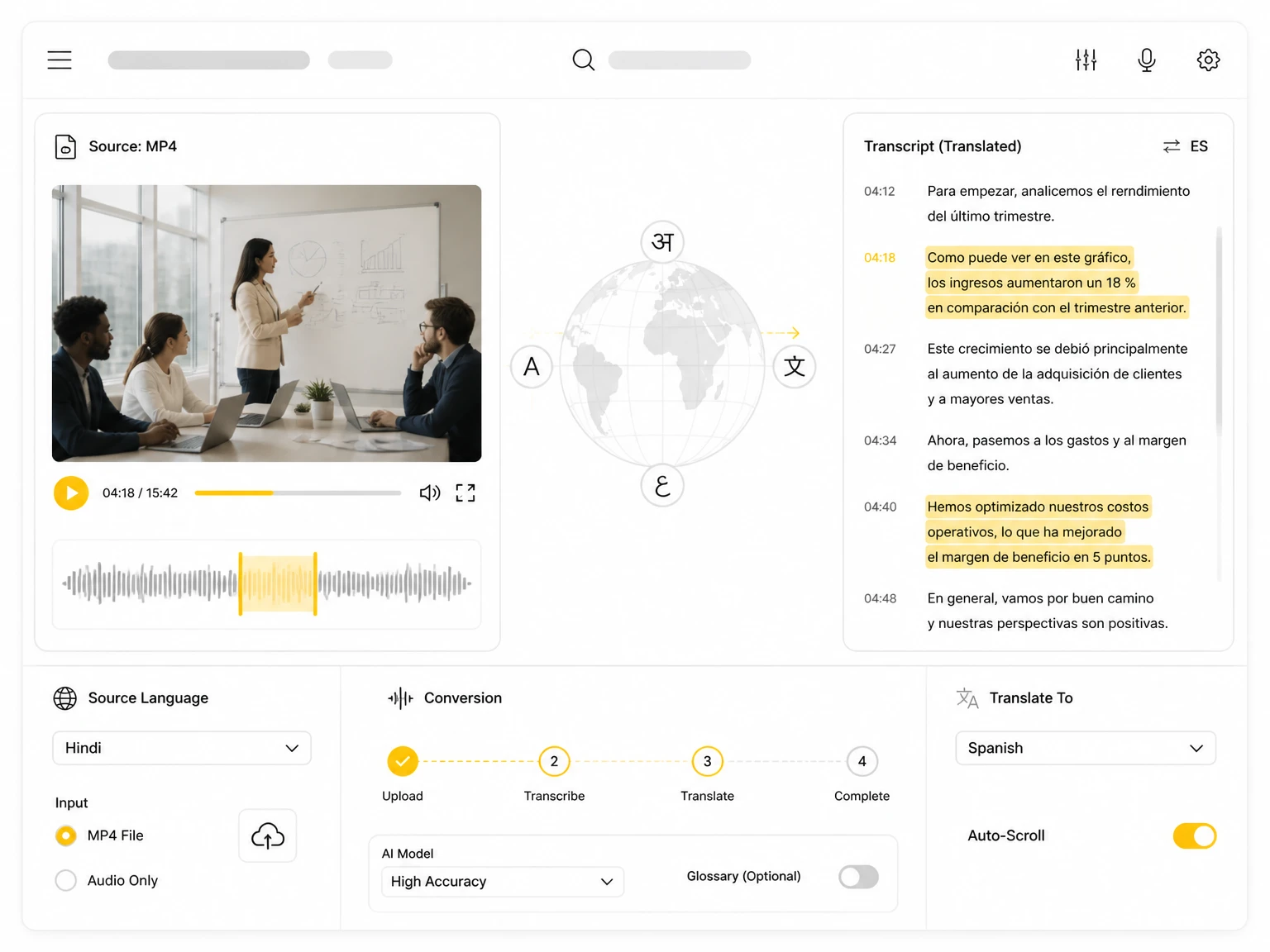
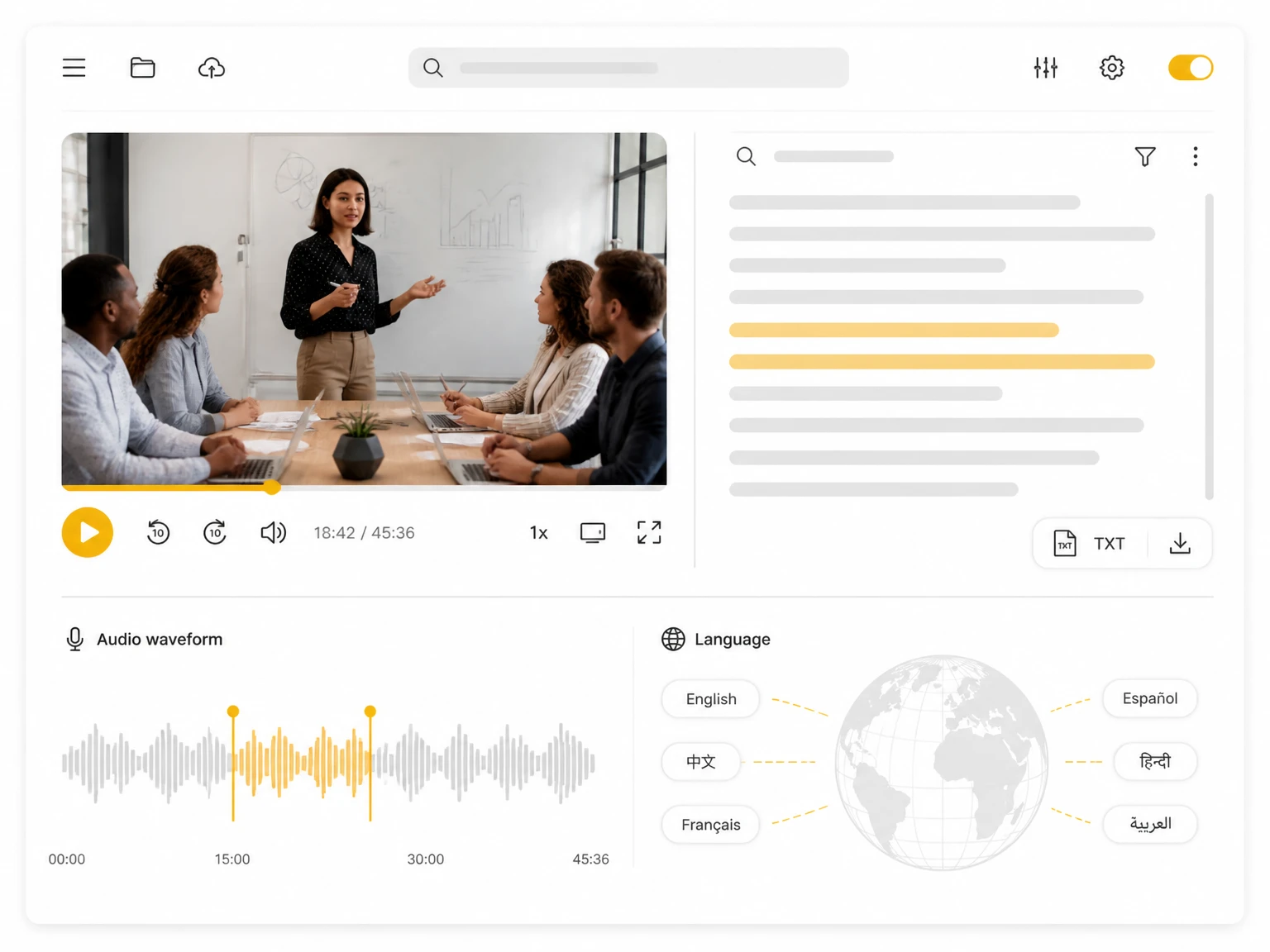
Speech in other languages is transcribed and translated, so an MP4 in one language returns readable text in another.
The transcript is split into paragraphs at natural pauses, so the text reads like an article rather than one long block.
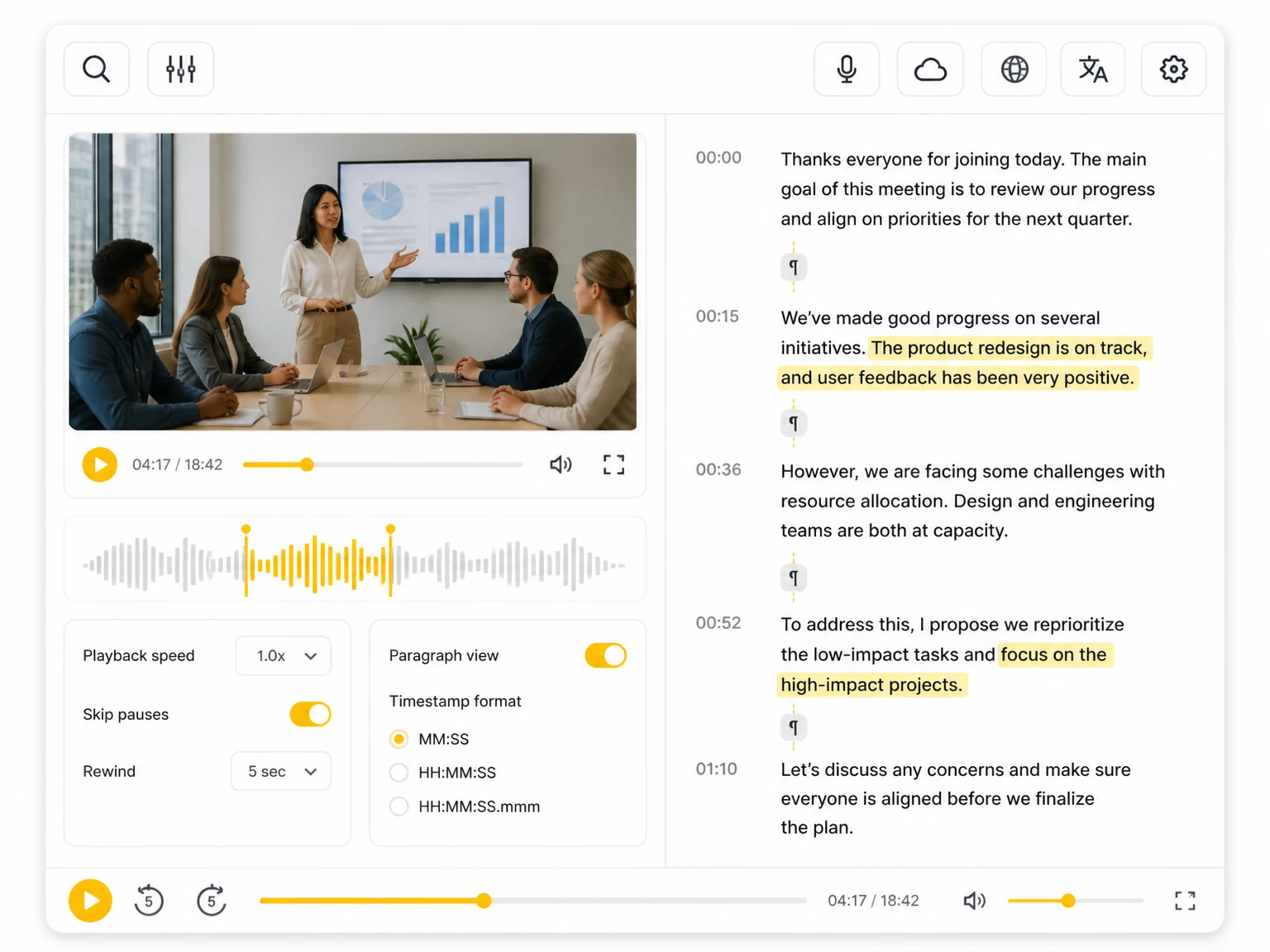
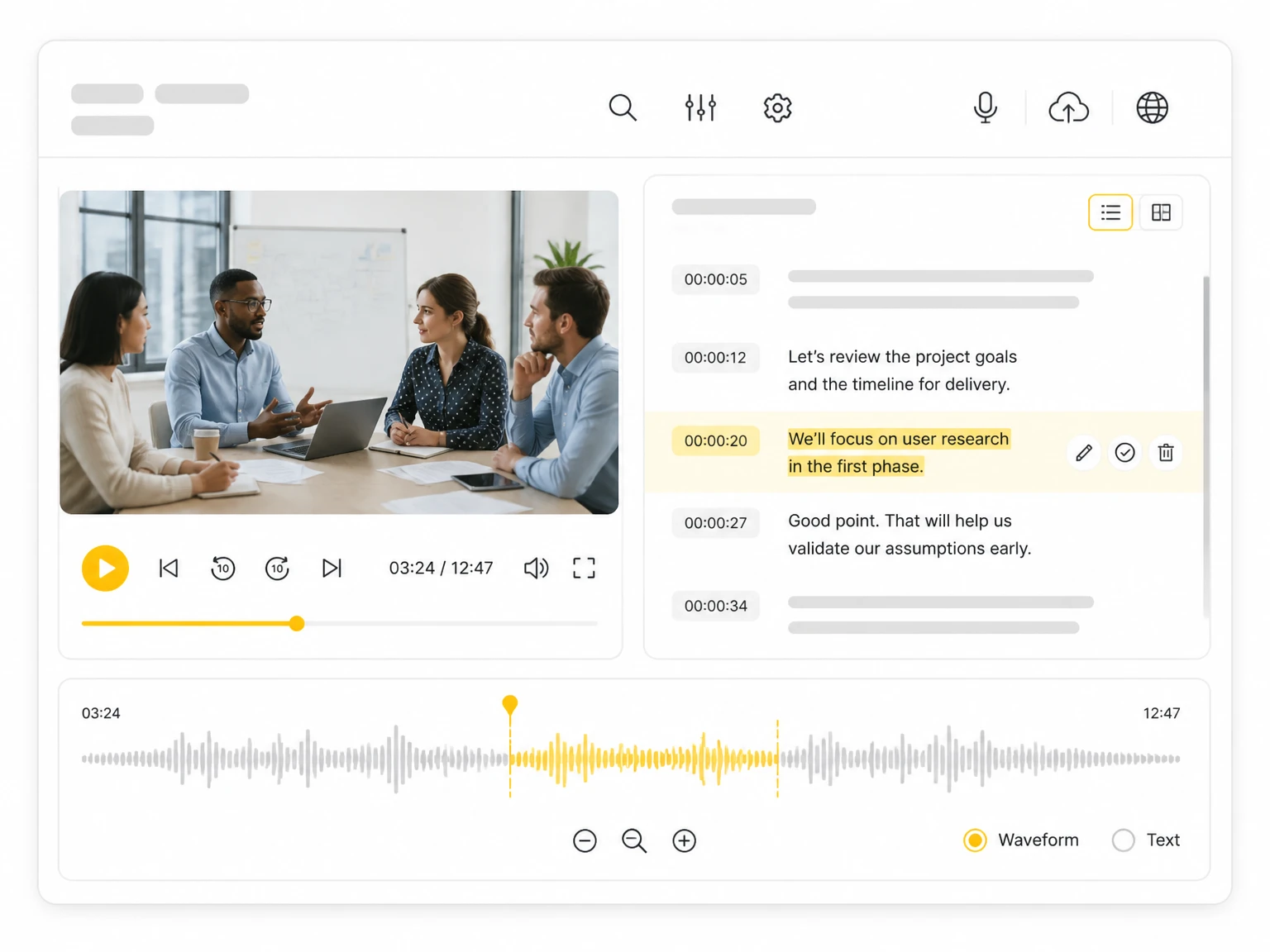
The transcript editor ties every correction to its timestamp, so edited text stays aligned with the original clip.
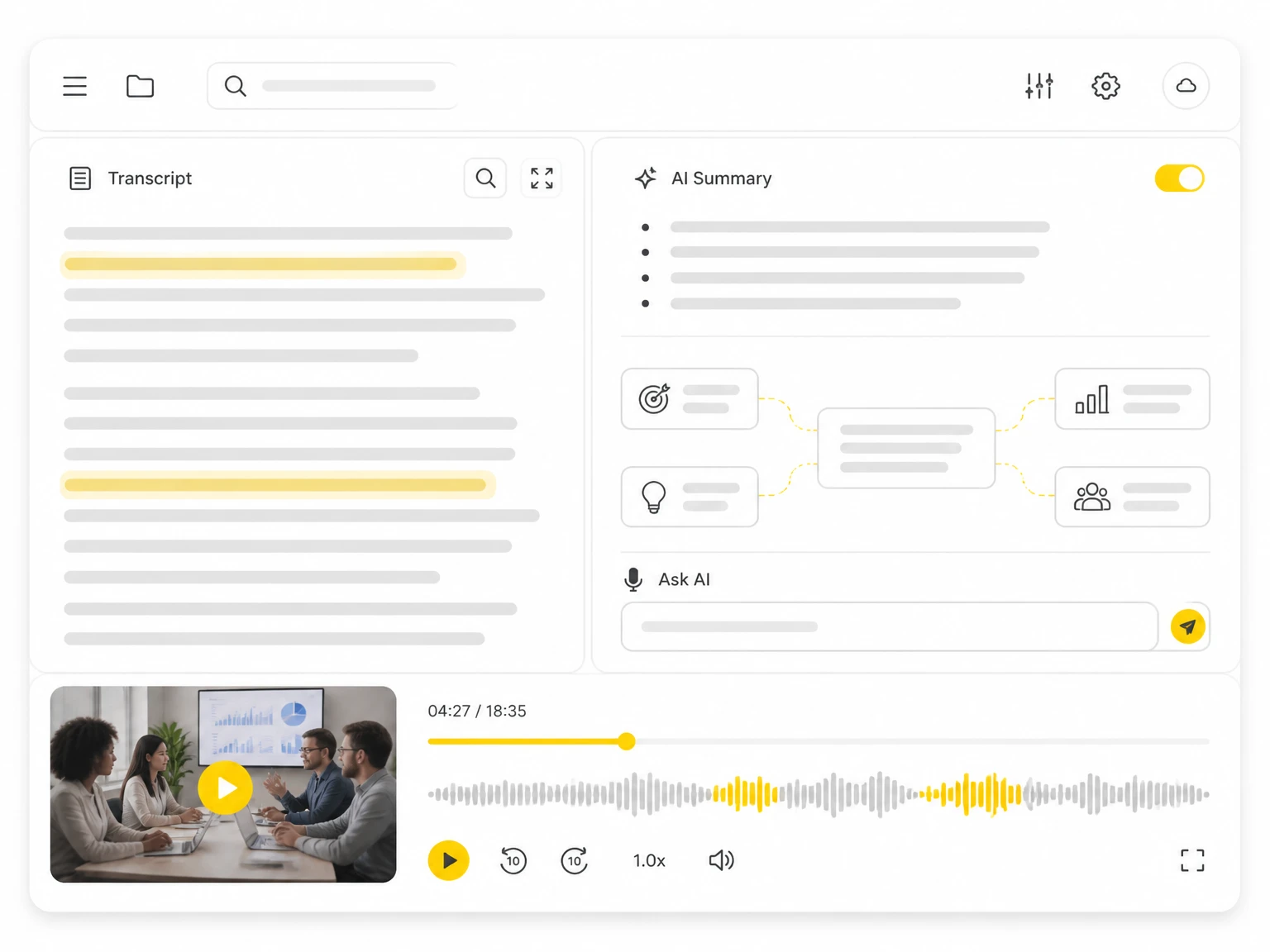
AI analysis adds a summary, mind map, and Ask AI answers, giving a structural view of longer MP4 recordings.
Export the transcript as a TXT file for notes, research, or archiving. The plain-text format works with most editors and document tools.
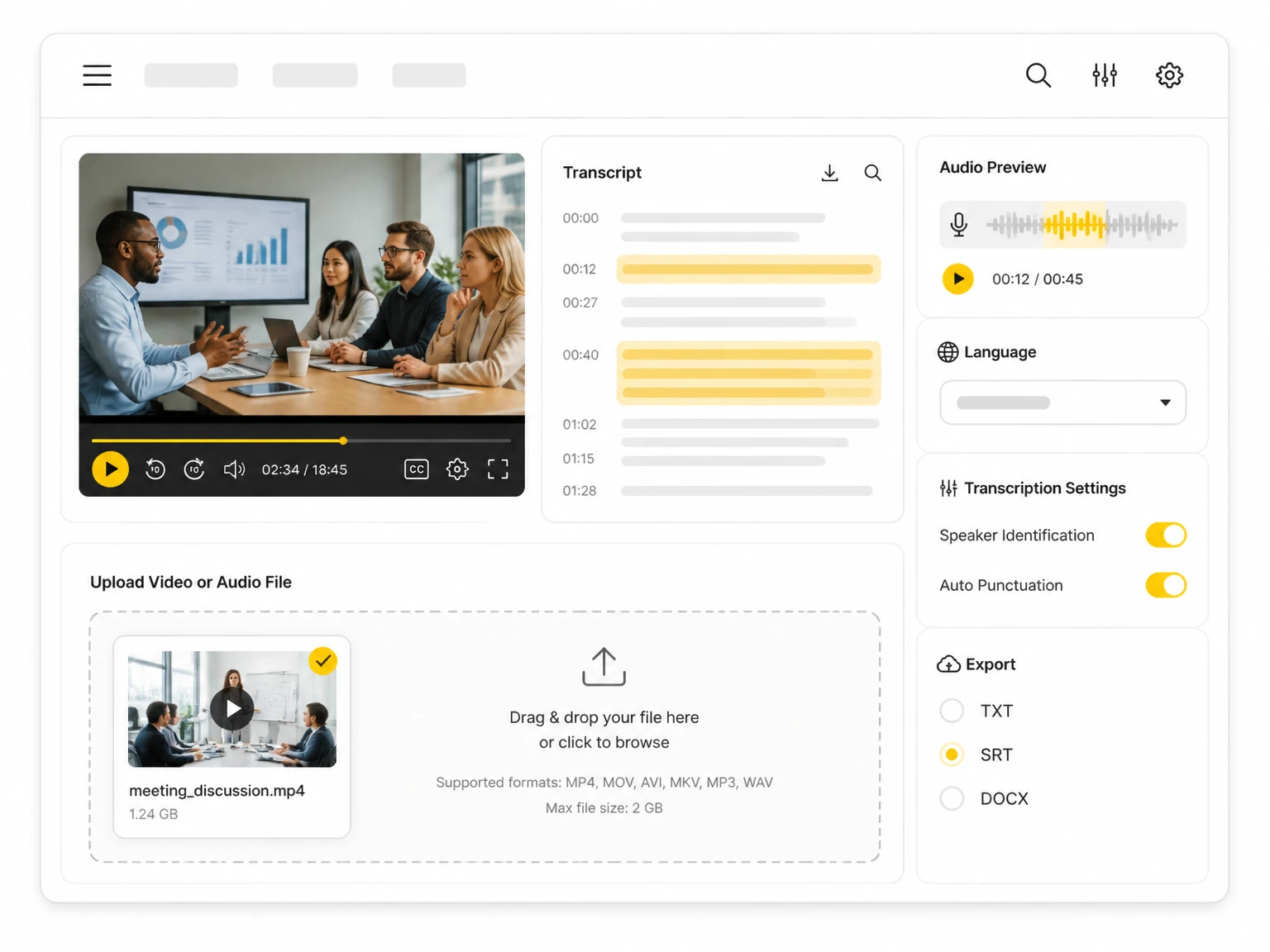
Choose or drag an MP4 file into the box. Most MP4 recordings — talks, meetings, courses — are accepted regardless of length.
1 / 6
Turn your own MP4 recordings into captions, blog drafts, and newsletter snippets from one transcript with consistent wording.
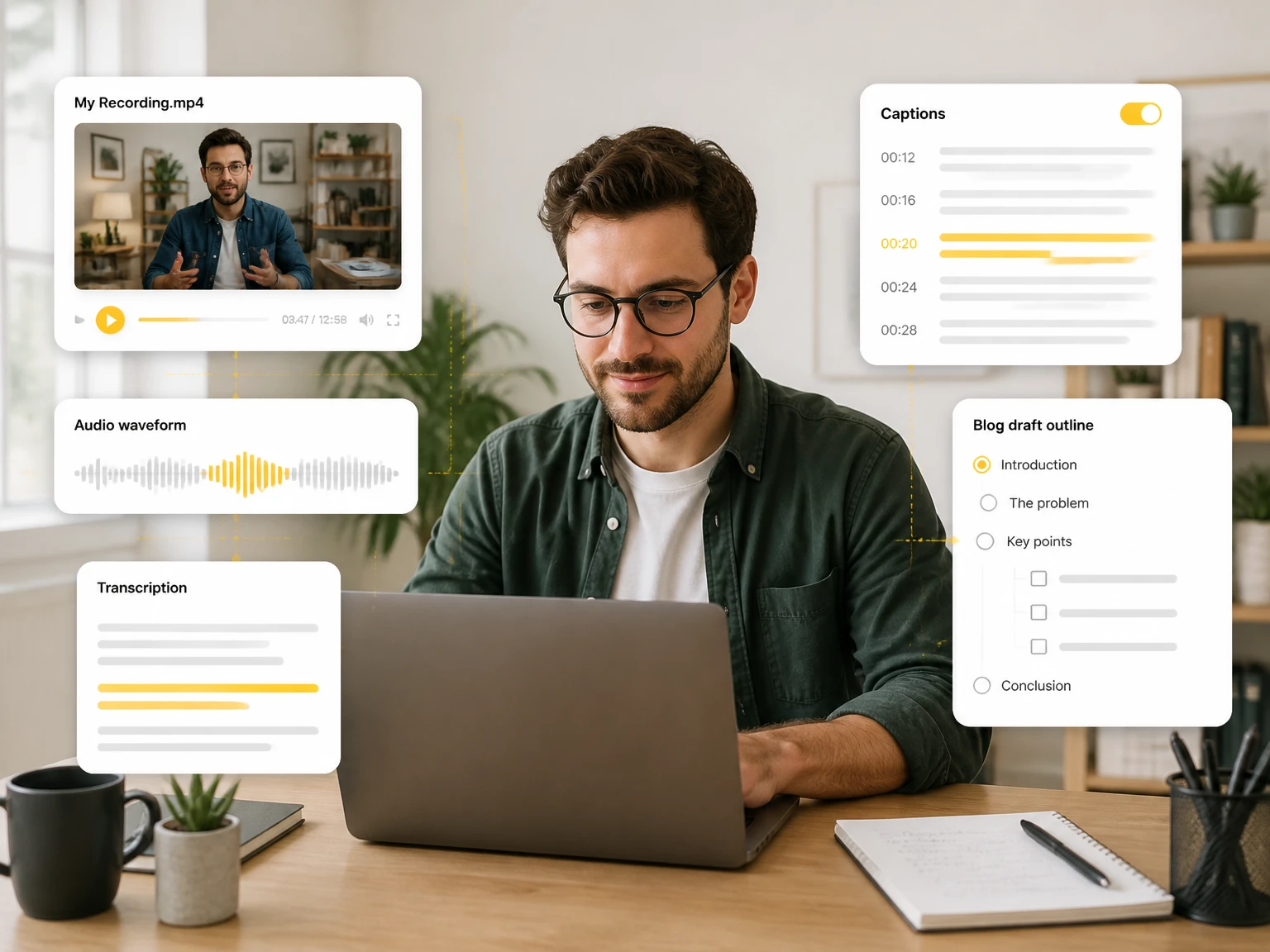
Upload any MP4 file and read the full transcript free — no sign-up, no length cap. Every line carries a timestamp, and the text is yours to copy, edit, or download. Nothing to install.
See how creators, students, researchers, and teams use searchable MP4 transcripts.
"My recordings run long and the audio is full of cross-talk. Running them through gives me subtitles plus blog drafts from clips I already shot."
"I pull quotes from client MP4 files for carousels and newsletters. Searchable text beats scrubbing every clip by hand."
"Most of my sources are recorded lectures. A transcript finds the one sentence I need without scrubbing a forty-minute file."
"Interviews land as MP4 files. The text lets me scan for claims and trends across many recordings at once."
"I teach with foreign-language MP4 clips. Transcribing and translating them gives students a text version beside the audio."
"Academic explainer MP4s become citable text. A searchable transcript keeps timestamped citations for my notes."
Yes. Upload an MP4 file and the transcript is generated without a sign-up. The workflow is free to run, which makes it practical for the one clip you need in text today.
No. Everything runs in the browser on desktop and mobile. An account is only needed if you want to keep a history of past transcripts.
MP4 is supported directly. Other common video and audio containers are also accepted, so a MOV or MP3 often works through the same upload.
Yes. Export the completed transcript as a TXT file for notes, research, editing, or archiving. The text can also be copied to the clipboard, with or without timestamps.
Short clips and longer recordings are both supported. Processing scales with length, so a sixty-minute file will not return as quickly as a thirty-second clip.
Yes. Keep timestamps when you plan to cite the source, and strip them when you need clean running text for notes or a draft.
Yes. The page is responsive, so an MP4 can be uploaded and the transcript read on a phone or tablet.
Uploaded files and transcripts are not public and are not shared with other users. Saved history can be managed or deleted at any time.
Accuracy varies with the source audio: clear speech in a quiet room transcribes cleanly, while background music, overlapping speakers, and strong accents introduce errors. Checking key quotes against the video is worthwhile.
Any MP4 you have the right to access can be processed. The text is derived from the creator's content, so republishing it depends on the file licence; check the terms before reuse.
Yes. Automatic speech recognition transcribes the audio directly, so a clip with no built-in captions still returns a timestamped transcript.
Yes. After the text is generated, translate it into another language or run an AI summary to condense a long recording.